
When Long-Shelf Foods Become Long-Term Dwellers
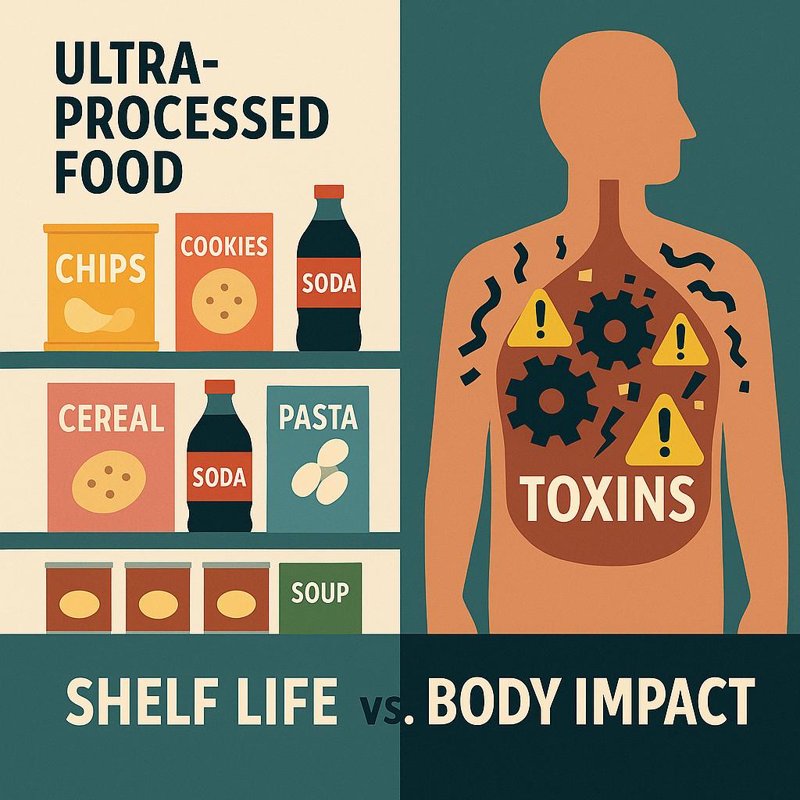
If a packaged food can last for years, imagine what it’s doing inside your body. Our modern food system is loaded with additives, preservatives, refined oils, and chemicals that our systems weren’t designed to handle. Over time, they accumulate, contributing to metabolic disruption, hormone imbalances, fat storage, and even fertility challenges.
Research shows that chemicals like phthalates—used in plastics and packaging—are linked to lower sperm counts. PMC+2PubMed+2 When we constantly subject our bodies to this kind of exposure, the effects become cumulative, not isolated.
🌟 Choose Conscious Nourishment
Instead of starting with “what to avoid,” let’s begin with what to embrace. Use your label-reading tools (like your Pocket Book) and reward clean ingredients—not just low calories.
Here are some nutrient-rich foods that contribute to long-term health:
- Avocado – Supports stable blood sugar, brain health, and gut diversity
- Bitter foods (lemon, ginger, radicchio) – Help support liver detox and digestion
- Flaxseed & pumpkin seeds – Provide phytoestrogens, omega-3s, and hormonal support
- Grass-fed/organic meat – Supplies all essential amino acids needed for hormone synthesis
- Tryptophan-rich foods (pumpkin seeds, almonds, leafy greens, mushrooms, sweet potatoes) – Help the body produce serotonin
- Microbiome-supporting foods — follow the three P’s:
• Probiotics: sauerkraut, kimchi, plain yogurt, kombucha
• Prebiotics: onion, garlic, asparagus, legumes, nuts
• Polyphenols: dark chocolate, olives, herbs, berries, spices
🛠️ Keep It Real & Workable
At the core, nourishing your health is simple:
- Eat a variety of whole, real foods
- Avoid processed junk as much as possible
- Choose organic when feasible
When using packaged items, use your label-checking tool—if something earns a “sad face,” skip it