Opinion piece:
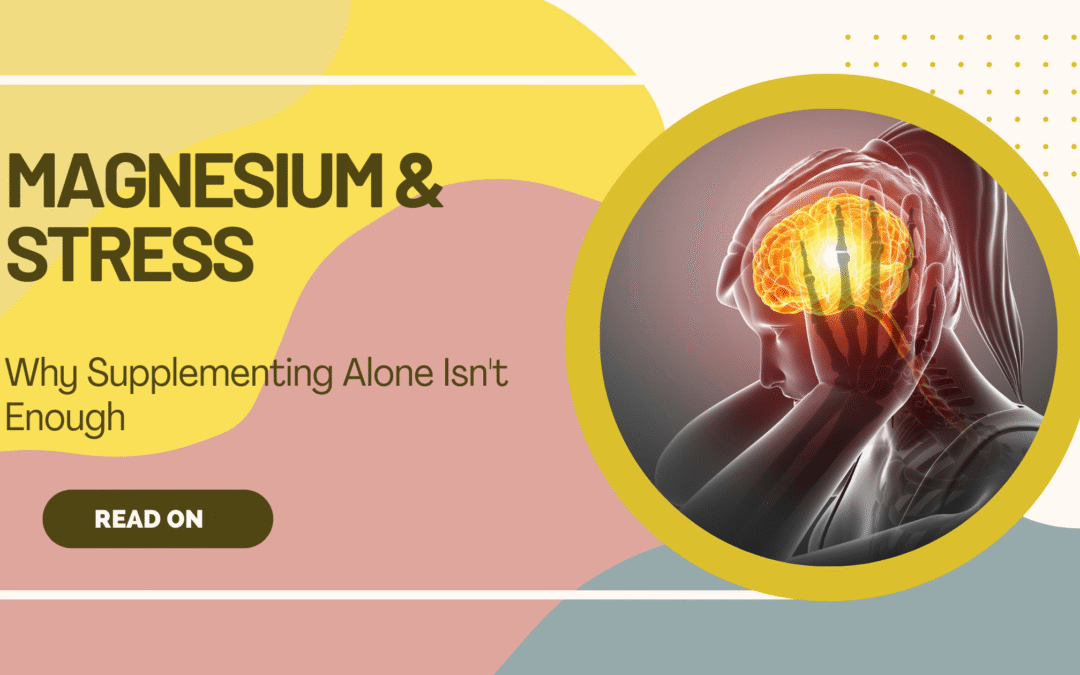
Magnesium & Stress: More Than Just a Supplement
Magnesium is often promoted as the “stress mineral.” Walk into any health store and you’ll see shelves of magnesium supplements promising calm and relaxation. But is simply taking a supplement enough?
Here’s the truth: magnesium is essential for hundreds of processes in the body — including the production of adrenaline. If you’re under chronic stress (what Dr. Libby Weaver calls living in the Red Zone), your body may be using magnesium faster than you can replace it. That means supplementation alone won’t solve the problem of magnesium stress.
How Magnesium and Stress Are Connected
Magnesium supports:
- Adrenaline production
- Muscle and nerve function
- Energy metabolism
- Sleep quality
But here’s the catch — if you’re constantly stressed, magnesium gets used up more quickly. So while magnesium supplements can help, it’s a bit like filling a bucket with a hole in the bottom. Unless you reduce stress at its source, you’ll never fully get ahead.
That’s why it makes sense to combine magnesium support with lifestyle shifts that move you from the Red Zone (stress mode) into the Green Zone (rest-and-digest mode).
The “Chicken or the Egg” Dilemma
Many women ask: Should I take magnesium to reduce stress, or reduce stress first so I don’t deplete magnesium? The answer is: both.
Yes, magnesium has many benefits, but working on stress reduction alongside supplementation gives you the best chance at long-term results.
And one of the simplest, most powerful ways to reduce stress doesn’t cost a cent: diaphragmatic breathing.
The Free Tool That Works Better Than Any Supplement
Deep belly breathing stimulates the diaphragm, which in turn “tickles” the vagus nerve — activating the parasympathetic nervous system (aka the Green Zone). This helps calm the body, lower cortisol, and preserve your precious magnesium stores.
Here are a few simple ways to try it:
- Take 20 deep breaths when you wake up, before each meal, and before bed.
- Try legs up the wall for 5–10 minutes while focusing on slow belly breaths.
- If sitting still feels stressful, choose a movement-based breathing practice like yoga or tai chi.
Many of my clients report that when I include deep breathing in their posture programs, they sleep better within just a few days.
What Happens When You Breathe Consistently
Over time, the stress triggers don’t disappear — but your response changes. Suddenly:
- The kids don’t feel quite as annoying.
- Road rage softens.
- Opening your inbox to 100 emails doesn’t spike your anxiety the way it once did.
The stressor is the same — but how you feel about it is different.
Key Takeaway
Magnesium and stress are deeply connected. Supplements can help, but unless you also address chronic stress through lifestyle shifts, you’re not getting the full benefit. Start with simple, consistent habits like diaphragmatic breathing, nourishing whole foods, and prioritizing rest. Then magnesium can truly do its job..